The 4th Trimester Hair Rescue: A Month-by-Month Recovery Guide
Updated
Postpartum hair loss follows a predictable pattern. Here's exactly what to expect each month, what helps during peak shedding, and when regrowth begins.
Postpartum hair loss follows a predictable pattern. Here's exactly what to expect each month, what helps during peak shedding, and when regrowth begins.
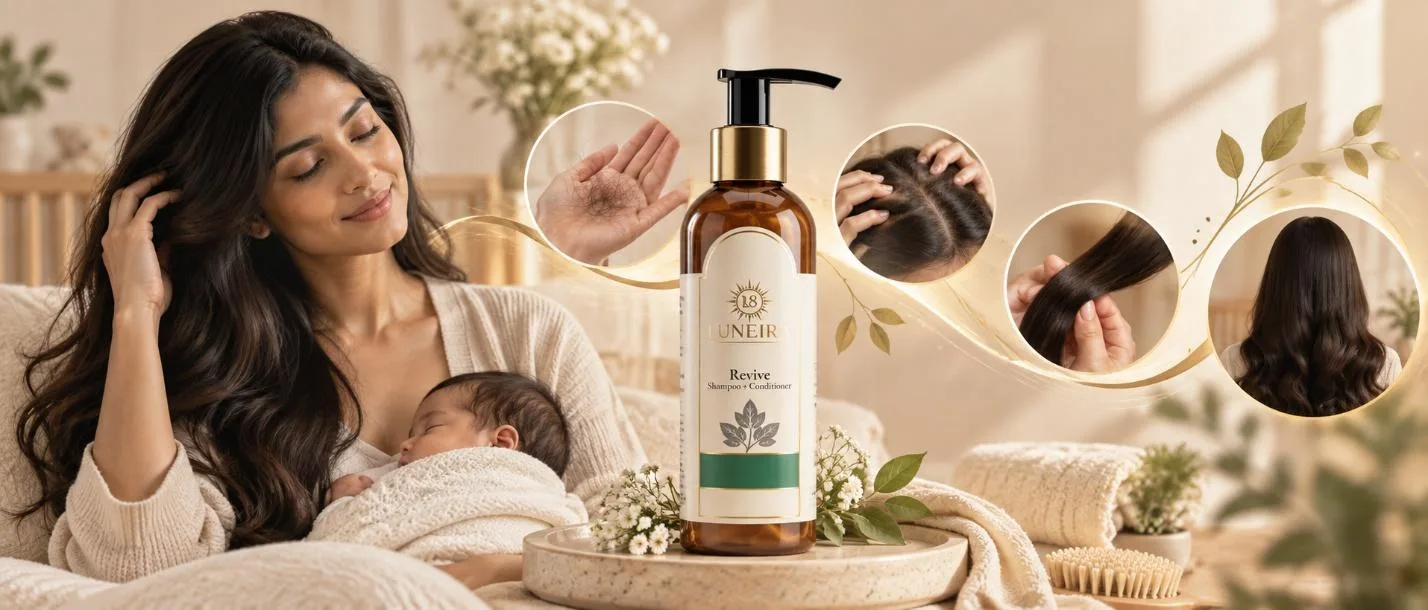
Postpartum hair loss can be shocking. Your hair may still look thick after delivery, then a few months later you suddenly notice more strands in the shower and around the house.
This usually happens because pregnancy hormones keep more hairs in the growth phase. After delivery, many of those hairs enter the shedding phase together. This is called postpartum telogen effluvium and usually improves with time.
Months 1-3: The Calm Before the Shed
During the first few weeks, you may not notice much change. The hormonal shift has already started, but the hair cycle takes time to respond.
This is a good time to simplify your routine. Use a gentle pregnancy safe shampoo, avoid very tight hairstyles and reduce frequent heat styling if your hair feels fragile.
Focus on nutrition too. Protein, iron, zinc and other nutrients are important for normal hair growth, but supplements should be guided by your doctor, especially while breastfeeding.
A shorter cut, layers or a side part may also make thinning less noticeable.
Months 3-6: When Shedding Usually Feels Worst
This is the stage that worries most new mothers. You may see noticeably more hair coming out while washing or combing.
It can look dramatic, but postpartum shedding is usually temporary and reflects hairs moving through the normal cycle after pregnancy.
Be gentle during this period:
- Detangle with a wide-tooth comb.
- Avoid pulling wet hair into tight ponytails.
- Keep heat styling to a minimum.
- Massage the scalp gently rather than aggressively.
- Choose cleansing products that leave the scalp clean without making the lengths feel stripped.
If you are searching online for the best chemical-free shampoo, remember that no cosmetic is literally chemical-free. A more useful goal is a formula that leaves out ingredients you want to avoid and uses gentle cleansing and conditioning ingredients.
Months 6-12: Regrowth Starts Becoming Visible
For many mothers, shedding begins to settle over the following months. You may start noticing short new hairs around the temples or hairline. These “baby hairs” can stick up at first, but they are often a welcome sign that the growth cycle is moving forward.
Keep your routine simple and give your hair time. Recovery is different for every mother.
If shedding remains very heavy, continues beyond the expected postpartum period, or you notice round bald patches, scalp inflammation or other symptoms, speak with a dermatologist or your doctor. Thyroid problems, iron deficiency and other conditions can also contribute to hair loss after delivery.
Where Luneira Revive Fits In
At Luneira, we formulated Revive Shampoo + Conditioner for pregnancy and postpartum hair loss, which is pregnancy-safe, breastfeeding-safe, hormone-safe, and dermatologist-tested.
The 2-in-1 formula contains Redensyl, Biotin, Red Onion Extract, Green Tea, Oat Kernel Extract and Panthenol. Our Hair Anchor Technology works with Redensyl and Biotin to combat shedding, while Oat Extract and Panthenol help prevent dryness and flaking.
Revive is also fragrance-free and made without SLS/SLES, silicones, parabens, phthalates, synthetic fragrances, sulfates or artificial colours.
For anyone looking for a pregnancy safe shampoo that can continue into the nursing months, Revive is designed to make that transition simple. If “best chemical free shampoo” is what brought you here, focus instead on a clear ingredient list and the exclusions that matter to you.
Frequently Asked Questions
When does postpartum hair loss usually start?
It often becomes noticeable a few months after delivery rather than immediately. This delay is linked to the normal hair-growth cycle after pregnancy hormones change.
How long does postpartum hair loss last?
For many mothers, shedding gradually improves within the first year after delivery. Regrowth may take longer to look full because hair grows slowly.
Does breastfeeding cause postpartum hair loss?
Postpartum hair shedding is mainly related to hormonal changes after pregnancy. Breastfeeding mothers can experience it too, but the timing and amount vary from person to person.
What shampoo is good for postpartum hair fall?
Choose a gentle formula that cleans without making fragile hair feel overly dry. Luneira Revive combines Redensyl, Biotin, Red Onion Extract, Green Tea, Oat Kernel Extract and Panthenol.
Is Luneira Revive safe while breastfeeding?
Yes. The Revive Shampoo + Conditioner is breastfeeding safe as well as pregnancy safe and hormone safe.
When should I see a doctor for postpartum hair loss?
Seek medical advice if hair loss is severe, patchy, associated with scalp symptoms, or does not begin improving over time. Your doctor may check for issues such as thyroid changes or iron deficiency.