Best Stretch Mark Oil for Pregnancy in India: What to Look For
Updated
By Prayash Pal, founder of Luneira
Choosing a belly oil? Not all are created equal. Here's what actually prevents stretch marks, which ingredients matter, and why absorption speed changes everything.
Choosing a belly oil? Not all are created equal. Here's what actually prevents stretch marks, which ingredients matter, and why absorption speed changes everything.
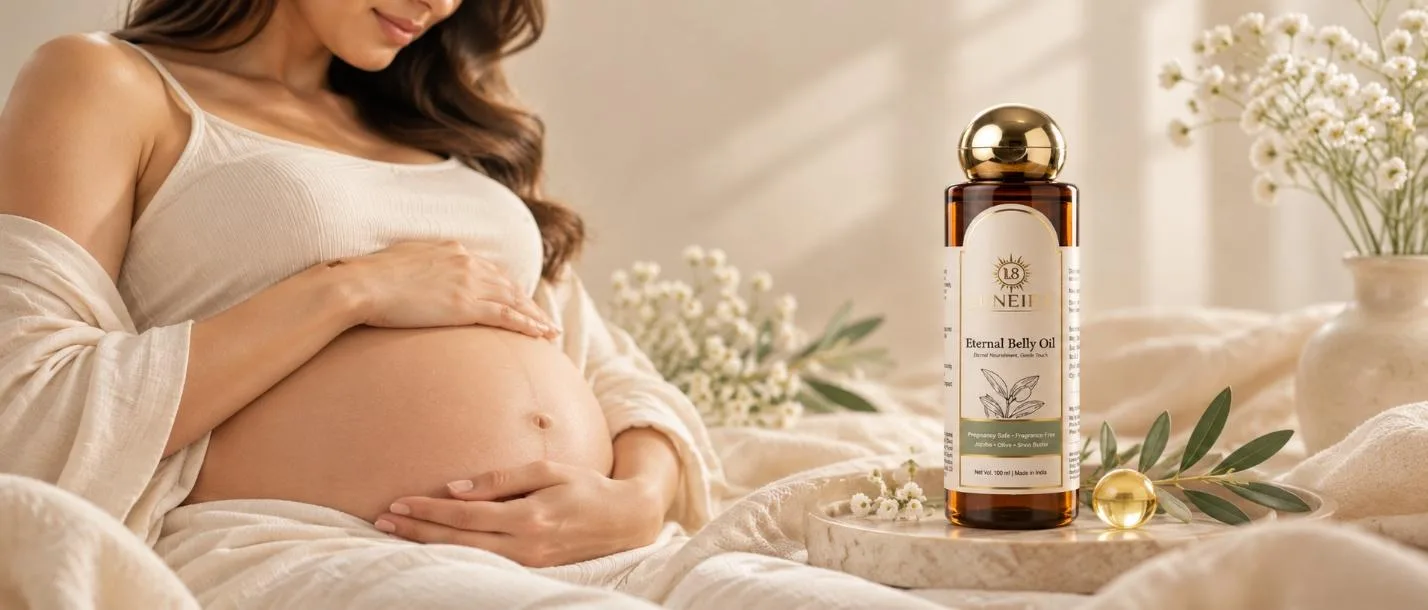
As your belly grows during pregnancy, the skin around your stomach, hips, thighs and breasts has to stretch quickly. For many women, that means stretch marks. They are completely normal, but dryness, tightness and itching can make the stretching phase uncomfortable.
A good stretch mark oil for pregnancy cannot guarantee that marks will never appear. What it can do is keep your skin moisturised, soft and comfortable while your body changes. So instead of looking for miracle claims, it makes more sense to look closely at the ingredients and how the oil feels on your skin.
Best Stretch Mark Oil for Pregnancy: Quick Answer
Quick answer: The best stretch mark oil for pregnancy is fragrance-free, free of parabens and mineral oil, and built on skin-friendly oils like jojoba, sunflower and shea butter with Vitamin E. It should absorb fast without a greasy film, and you should apply it daily from the first trimester. No oil can stop stretch marks completely, but steady moisturising keeps skin soft and eases itching.
| Option | Texture & absorption | Best for | Watch out for |
|---|---|---|---|
| Dry belly oil (jojoba, sunflower, Vitamin E) | Light, absorbs in minutes | Daily use under clothes, all trimesters | Added synthetic fragrance |
| Heavy body oil (coconut, almond blends) | Rich, slow to absorb | Night-time massage | Greasy residue, nut allergies |
| Belly butter / balm (shea, cocoa) | Thick, very occlusive | Very dry, tight third-trimester skin | Can feel heavy in Indian heat |
| Stretch mark cream / lotion | Water-based, quick | Large areas, hot weather | Shorter-lasting moisture, preservatives |
5-point checklist before you buy
- Fragrance-free (no synthetic perfume or strong essential oils)
- Made without parabens and mineral oil
- Contains jojoba, sunflower, shea butter or Vitamin E
- Absorbs without staining clothes
- Labelled pregnancy-safe and dermatologist tested
Looking for one that ticks every box? See Luneira Eternal Belly Oil.
Why Do Stretch Marks Form During Pregnancy?
Stretch marks develop when the middle layer of the skin is stretched as the body grows. Pregnancy hormones can also affect the skin and make some women more likely to develop them.
Genetics matter too. If stretch marks run in your family, your chances may be higher. Rapid changes in body size can also play a role.
This is why no oil, butter or cream can promise complete prevention. Regular moisturising, however, can help reduce dryness and the uncomfortable tight or itchy feeling that often comes with rapidly stretching skin, and can also improve the appearance of lines to some extent.
Read more about how to prevent stretch marks in pregnancy, including what moisturising can and cannot do.
What Ingredients Should You Look For?
When choosing a belly oil, simple and moisturising ingredients are usually a good place to start.
Jojoba Oil
Jojoba has a lightweight texture and is similar in composition to the natural oils produced by the skin. It helps soften dry skin without leaving the heavy, sticky feeling that some body oils can create.
Shea Butter
Shea butter is a rich emollient that helps reduce moisture loss. It can be especially useful when your belly starts feeling dry or tight during the later stages of pregnancy.
Vitamin E
Vitamin E is commonly used in body oils because of its antioxidant and moisturising properties. It helps support the skin barrier and keeps dry areas feeling softer.
Sunflower and Olive Oil
Plant oils such as sunflower and olive oil contain fatty acids that help condition the skin and reduce dryness. They can be especially helpful when used regularly after a shower, while the skin still has some moisture.
Look Beyond the “Stretch Mark Prevention” Label
When shopping for the best stretch mark oil for pregnancy, do not judge a product only by what is written on the front of the bottle.
Check whether the formula is comfortable enough to use every day. A very greasy oil that transfers onto clothes may eventually end up sitting unused in your bathroom.
During pregnancy, you may also become more sensitive to strong smells. If fragrances trigger nausea or irritate your skin, a fragrance-free formula may be a much better choice.
Most importantly, check the complete ingredient list rather than assuming that a product is pregnancy-friendly simply because it is marketed to expecting mothers.
When Should You Start Using Belly Oil?
You do not have to wait until stretch marks appear.
Many women begin moisturising their belly during the first or second trimester and continue as their bump grows.
A simple routine could look like this:
First trimester: Apply once daily to your belly, hips, thighs and breasts if your skin feels dry.
Second trimester: Continue daily application as your belly starts growing more noticeably.
Third trimester: Apply once or twice daily depending on how dry or tight your skin feels.
Postpartum: You can continue moisturising while your skin gradually adjusts after delivery.
Gently massage the oil into the skin rather than rubbing aggressively. Consistency matters more than using a large amount at once.
Luneira Eternal Belly Oil: Made for Changing Pregnancy Skin
For mothers looking for a fragrance-free, non-greasy option, Luneira Eternal Belly Oil is designed specifically for pregnancy and postpartum skin.
The all natural formula includes jojoba oil, olive-derived ingredients, high-oleic sunflower oil, shea butter and Vitamin E to moisturise and keep stretching skin feeling soft and supple. It is also made without synthetic fragrance, parabens or mineral oil.
Our formula is hormone-safe and pregnancy-safe, and the product is dermatologist tested. The dry-oil texture is designed to absorb without leaving a heavy residue on clothes, which makes daily application easier.
The Bottom Line
The right belly oil will not promise impossible results. Instead, it should keep your changing skin soft, hydrated and comfortable throughout pregnancy. Choose a gentle formula you enjoy using consistently, and remember that stretch marks are a normal part of pregnancy for many women.
Frequently Asked Questions
Can stretch mark oil completely prevent stretch marks?
No topical oil can guarantee that stretch marks will not develop. Genetics, skin type, hormones and the amount of stretching all play a role. Oils are mainly useful for keeping the skin moisturised and comfortable.
When should I start using stretch mark oil during pregnancy?
You can start moisturising your belly from early pregnancy rather than waiting for stretch marks to appear. Continue regularly as your belly grows.
Which oil is good for a pregnant belly?
Look for gentle moisturising ingredients such as jojoba oil, sunflower oil, shea butter, olive-derived oils and Vitamin E.
How often should I apply belly oil?
Once or twice daily is usually enough, depending on how dry your skin feels. Applying after a shower can help seal in moisture.
Should pregnancy belly oil be fragrance-free?
It does not have to be, but fragrance-free products can be a better choice if pregnancy has made your skin sensitive or strong scents trigger nausea.