Is “Natural” the Same as Pregnancy-Safe? What Expecting Moms Need to Know
This blog explains why “natural” doesn’t always mean pregnancy-safe and what expecting moms should check before choosing skincare.
“As you nurture new life, remember to nurture yourself too.”
A few weeks into pregnancy, your bathroom shelf can suddenly start looking suspicious.
That face serum you loved? You start checking the ingredients.
Your body lotion? You Google every unfamiliar name on the label.
And then you spot a bottle that says “natural”, “herbal”, or “plant-based” and then immediately start to feel a little better.
Natural must mean safe during pregnancy, right?
NOT necessarily.
And this is one of the biggest misunderstandings around pregnancy skincare!
While natural ingredients can absolutely be useful, the word “natural” alone does not tell you whether a product is suitable for pregnancy.
When you are expecting, what matters more is what is actually inside the formula, how much of it is used, how the product has been tested. And also whether the ingredients have been chosen with pregnancy in mind.
Let’s make this easier to understand.
What Does “Natural” Actually Mean in Skincare?
The word “natural” sounds reassuring, but it can mean many different things.
A product may contain plant extracts, essential oils, botanical ingredients or naturally derived compounds and still call itself natural.
The problem is that “natural” does not automatically mean:
- Suitable for pregnancy
- Hormone-safe
- Non-irritating
- Dermatologically tested
- Free from questionable ingredients
- Safe for sensitive skin
In other words, a pretty green label with some leaves printed on it does not tell you enough.
This is why expecting moms should look beyond marketing words and focus on the full ingredient list and product safety.
Natural Ingredients Can Still Be Strong
Think about chilli, lemon juice, or even certain essential oils.
They are completely natural…but that does not mean you would want to apply them directly to sensitive skin, right?
Thus, the same logic applies to skincare.
Some natural ingredients may be too harsh, highly concentrated or unsuitable for certain skin conditions. Pregnancy can also make your skin more reactive than usual, as found in a 2014 study.
Thus, a face oil that worked perfectly before pregnancy might suddenly feel irritating. A heavily scented natural body butter might start giving you headaches. Certain botanical extracts may also lack enough pregnancy-specific safety data.
So the real question should not be, “Is this natural?”
It should be, “Has this been formulated to be suitable for use during pregnancy?”
Why Pregnancy Changes the Way You Choose Skincare?
Pregnancy brings major hormonal changes, and your skin often responds to them.
You may suddenly notice:
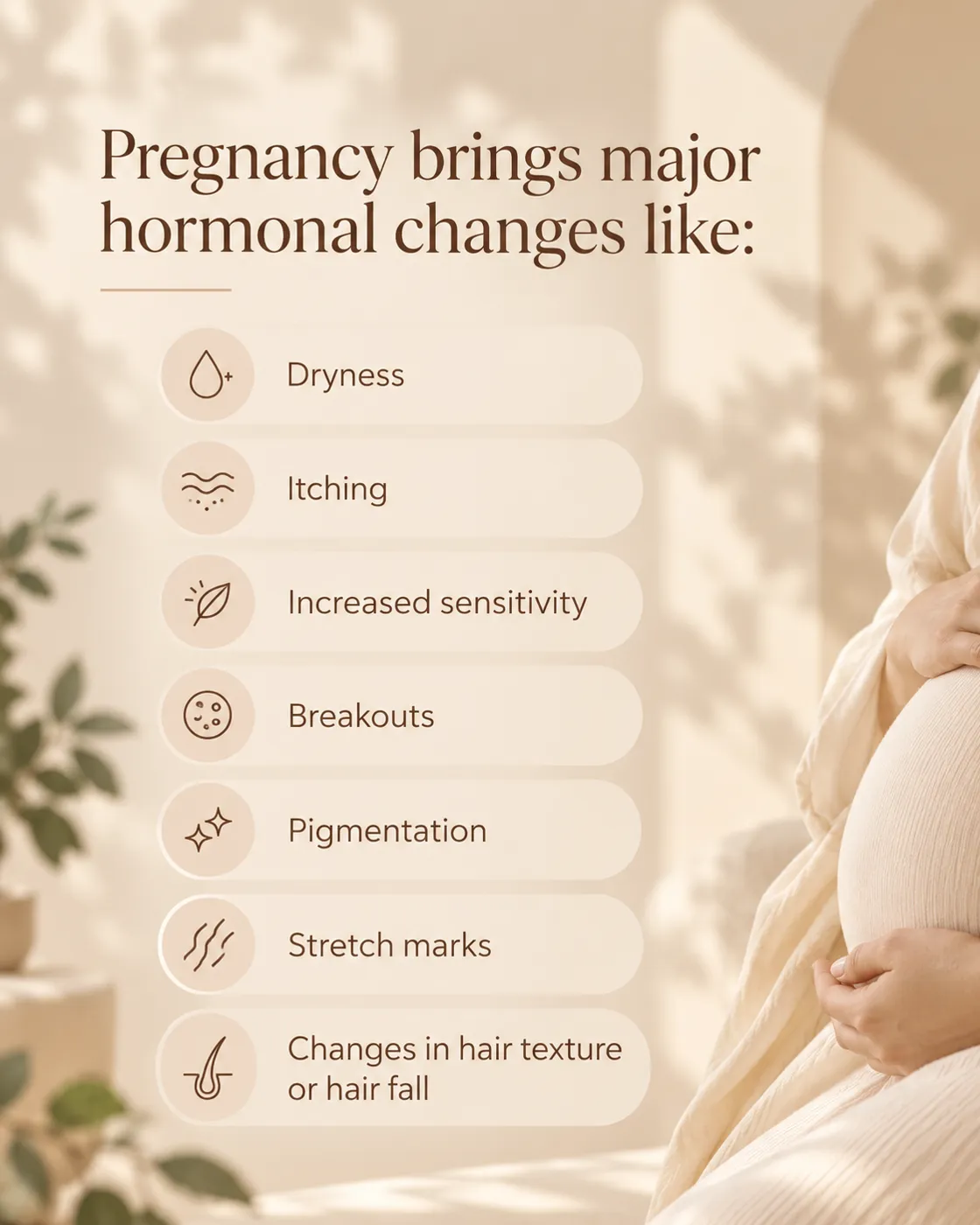
That means the skincare routine you followed before pregnancy may not always be the best fit now.
This is where carefully selected pregnancy safe skin care products become useful.
Instead of choosing something just because the label says natural, it helps to look for formulas that are specifically created around the needs of expecting mothers.
The focus should be on gentle care, dependable ingredients and avoiding ingredients that may be unsuitable during pregnancy.
“Chemical-Free” Is Not the Goal Either
Another common misunderstanding is that chemicals are automatically bad. And this is far from the truth.
Technically, everything around us is made of chemicals, including water.
What does matter is whether an ingredient is suitable, correctly formulated and used at an appropriate concentration.
Some scientifically developed ingredients can be well studied and useful, while some naturally derived ingredients can be irritating or poorly researched for pregnancy use.
So picking pregnancy safe skin care doesn’t have to be a battle between “natural” and “chemical”.
It should be about choosing products based on safety, formulation and evidence.
Read Beyond the Front Label
The front of a skincare bottle is designed to grab attention.
The ingredient list on the back tells you much more.
Instead of relying only on words such as:
- “Natural”
- “Herbal”
- “Organic”
- “Clean”
- “Pure”
Try to look for clearer information about what the product contains and what it avoids.
Many moms want formulas free of ingredients such as retinoids, certain harsh actives, phthalates, and parabens while pregnant.
Fragrance-free products can help if your skin has become sensitive or if you are bothered by strong scents, too.
The more a brand can tell you about their ingredients and their testing, the easier it is to make an informed choice.
Pregnancy-Safe Skincare Should Be About More Than One Ingredient
A product does not become pregnancy-safe simply because one popular ingredient has been removed.
The entire formulation matters.
This includes the active ingredients, preservatives, fragrance components, concentrations and even how the finished product is tested.
Luneira creates personal care specifically around motherhood, with every ingredient selected with both mother and baby in mind. We are India’s first hormone-safe and EDC-safe skincare brand created with the needs of pregnant and new moms in mind.
Here’s why expecting moms choose us for their skincare needs.
- Hormone-safe, pregnancy-friendly, and gentle on changing skin.
- Dermatologically tested and fragrance-free.
- Free from phthalates and parabens.
- GMP certified and made in India.
- Independently tested for added safety assurance.
- ISO 9001 certified.
- Heavy-metal tested for greater ingredient transparency.
- Clear safety information instead of vague “natural” claims.
Thus, at Luneira, we have a completely different approach when it comes to skincare for pregnant moms.
What Should Moms Look for Instead?
When shopping for pregnancy safe skin care products, a few simple checks can make the process easier.
Look for Dermatological Testing
Check whether the product is dermatologically tested for skin safety.
Check Pregnancy Safety
Prefer brands that specifically mention pregnancy safety, rather than only using terms like “natural” or “herbal.”
Don’t Assume Natural Means Gentle
Essential oils and botanical ingredients are not automatically mild or suitable for everyone.
Ask Your Doctor When Unsure
Speak with your doctor or dermatologist if you’re unsure about an ingredient, especially if you have a skin condition or use prescription treatments.
You can also use tools that help you understand ingredient lists instead of trying to decode everything on your own.
We also offer a Safety Check and ingredient-scanning option designed to make ingredient checking simpler for expecting mothers.
Your Routine Does Not Need to Be Complicated
Pregnancy already comes with enough things to think about.
Your skincare routine does not need twelve different steps.
A simple routine with a few well-chosen products is often easier to follow.
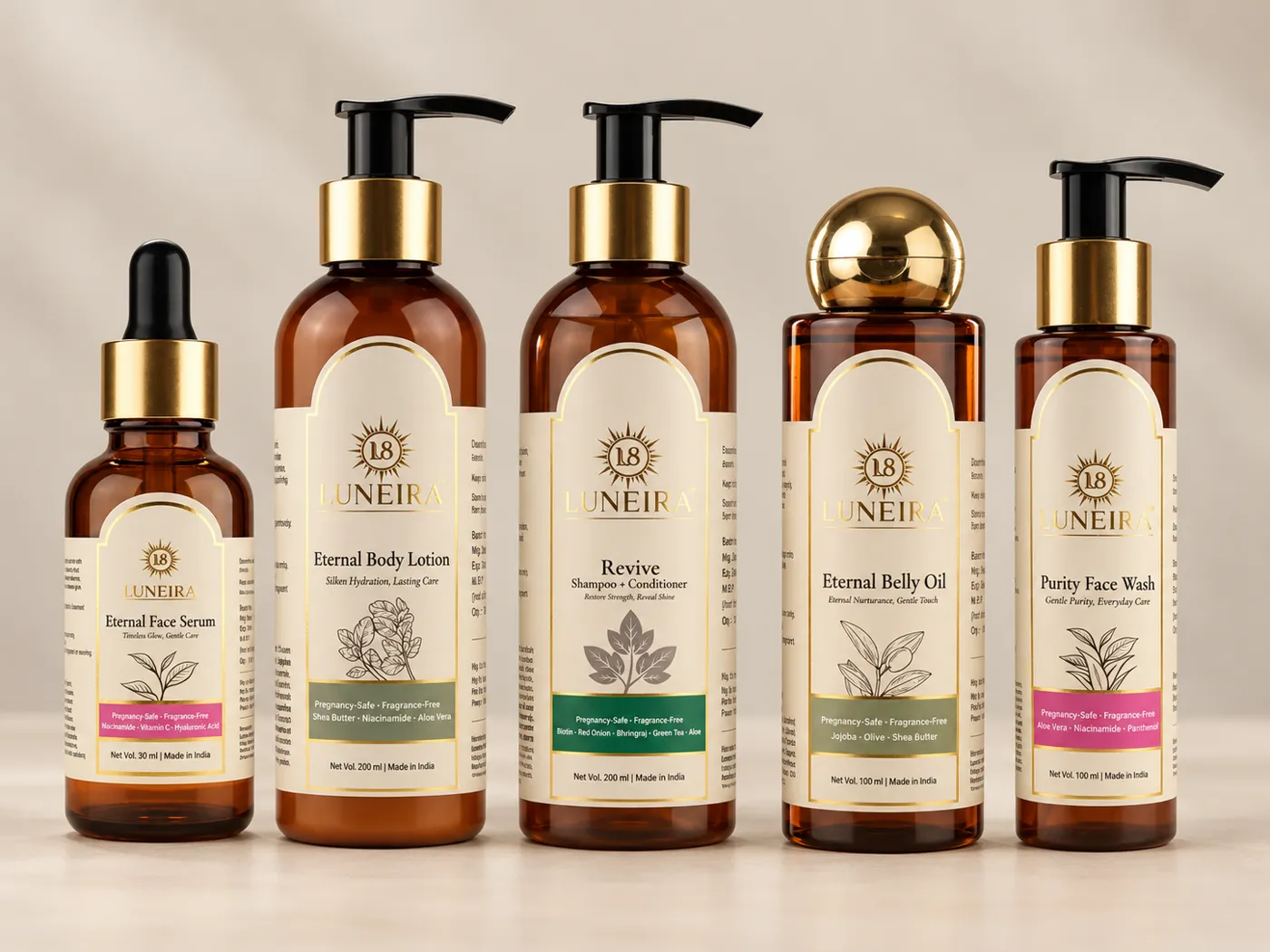
Depending on your needs, that might include a gentle face serum, nourishing body lotion, belly oil, mild shampoo and conditioner.
Luneira’s Motherhood Collection includes options for concerns such as dry and sensitive skin, stretch marks, pregnancy glow and hair fall.
The Eternal Face Serum is designed for a pregnancy-friendly glow, while the Eternal Body Lotion focuses on comfortable hydration for dry skin.
The Eternal Belly Oil is made for changing skin around the belly, while the Revive Shampoo + Conditioner supports hair and scalp care during a time when hormonal changes may affect hair.
The idea is not to use more products.
It is to use products you can feel more confident about.
Natural Can Be Good. Pregnancy-Safe Is More Specific.
Natural skincare is not automatically bad. Many natural ingredients can be gentle, useful, and enjoyable to use.
But during pregnancy, the word “natural” simply doesn’t give you enough information. Pregnancy-safe skincare is one step further.
It asks if the ingredients are suitable, if the formula has been tested, if unnecessary irritants have been avoided, and if the product has been made with the needs of expecting mothers in mind.
That difference matters.
Choose Skincare That Tells You More Than “Natural”
If pregnancy has made you question everything sitting on your bathroom shelf, you are definitely not the only one.
You do not need to panic over every ingredient, and you do not need to throw away everything that is not labelled natural either.
Start by choosing products that are transparent, thoughtfully formulated and created specifically for this stage of life.
Explore Luneira’s Motherhood Collection for hormone-safe, dermatologically tested and pregnancy-friendly personal care designed with every ingredient chosen for two…you and the little one you are growing.
Frequently Asked Questions
Is natural skincare always safe during pregnancy?
No. “Natural” does not automatically mean pregnancy-safe. Ingredient choice, concentration, formulation, and testing all matter.
What makes skincare pregnancy-safe?
Pregnancy safe skin care is formulated without ingredients that may be unsuitable during pregnancy and is designed to be gentle on changing, more sensitive skin.
How do I choose pregnancy safe skin care products?
Check the full ingredient list, look for transparent safety information, and choose dermatologically tested products specifically formulated for pregnancy.
Are herbal and organic products safe during pregnancy?
Not always. Herbal, botanical, and organic ingredients can still cause irritation or may not have enough pregnancy-specific safety data.
Which skincare ingredients should pregnant women avoid?
Commonly avoided ingredients include retinoids and certain strong actives. If you are unsure about an ingredient, check with your dermatologist or doctor.
Is Luneira skincare suitable during pregnancy?
Luneira formulates its products to be pregnancy-friendly, hormone-safe, dermatologically tested, fragrance-free, and free from phthalates and parabens. —---------------------------------------------------------------------------------------------------------------------------- Meta Title - Is Natural Skincare Actually Safe in Pregnancy? Meta Description - "Natural" doesn't always mean pregnancy-safe. Learn which "natural" skincare ingredients can actually be risky during pregnancy — and what to look for instead.