Pregnancy Melasma: Safe Treatments That Actually Fade Dark Patches
Updated
Dark patches appearing on your face? Melasma affects up to 70% of pregnant women. Here's what's safe, what's not, and a realistic timeline for fading.
Dark patches appearing on your face? Melasma affects up to 70% of pregnant women. Here's what's safe, what's not, and a realistic timeline for fading.
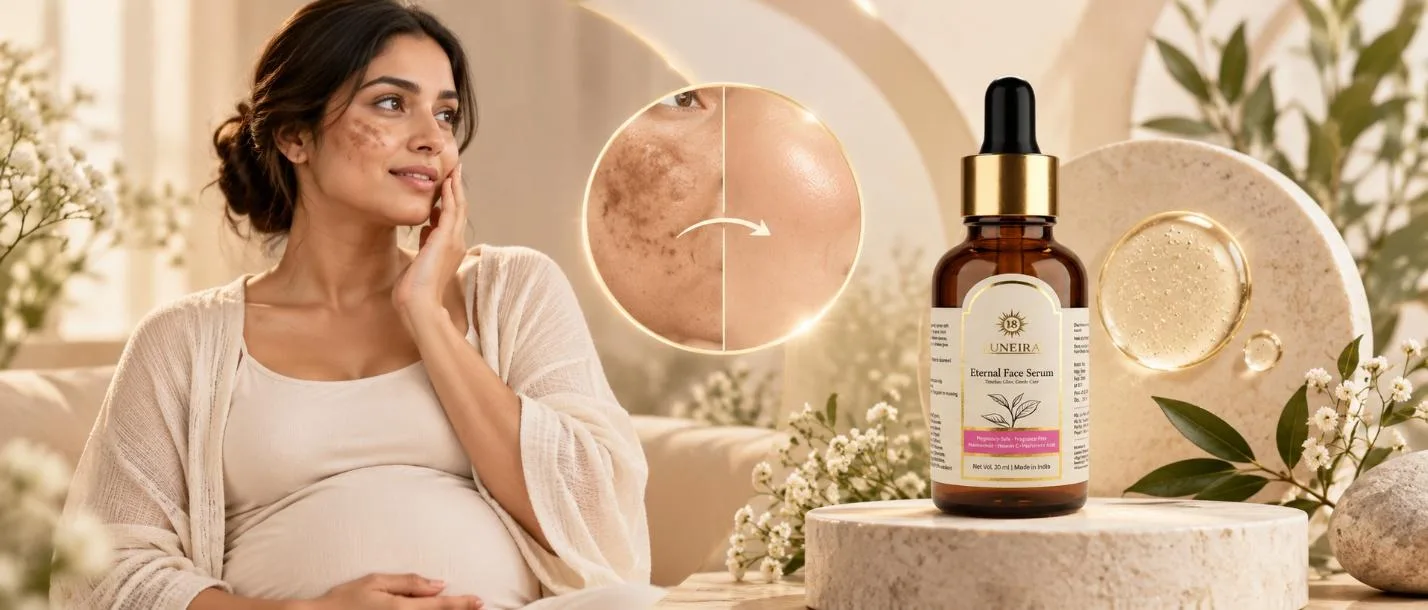
Brown or grey-brown patches across the cheeks, forehead, upper lip or nose are common in pregnancy. This is melasma, often called the “mask of pregnancy.”
Melasma during pregnancy happens when hormonal changes make pigment-producing cells more active. Sunlight and visible light can then deepen the patches.
The goal is to prevent further darkening, support gradual brightening, and protect the skin while hormone levels are changing.
Why Pregnancy Triggers Melasma?
Estrogen and progesterone rise significantly during pregnancy. In some women, this makes melanocytes more responsive and encourages extra pigment production.
Sun exposure adds another trigger. Even a good brightening serum will struggle if the skin is repeatedly exposed without protection. That is why sunscreen is the foundation of any routine for pregnancy melasma.
Ingredients to Avoid While Pregnant
Some common pigmentation treatments are not first-choice options during pregnancy.
Hydroquinone is usually avoided because a relatively high amount can be absorbed through the skin and pregnancy safety data is limited.
Topical retinoids such as tretinoin, retinol and related Vitamin A derivatives are also generally avoided during pregnancy. If you were using a prescription pigmentation cream before conceiving, check the ingredients with your doctor rather than continuing it automatically.
A gentle pregnancy safe skin care routine can still help manage pigmentation.
Niacinamide and Vitamin C: A Practical Brightening Pair
Niacinamide is useful for uneven-looking skin tone while also supporting the skin barrier. It works differently from retinoids and is commonly used in pregnancy-focused skincare.
Vitamin C adds antioxidant support and can help brighten the look of dark patches over time. It also supports collagen and helps protect the skin from environmental oxidative stress.
Consistency matters more than layering several strong actives at once.
A simple approach is:
Morning: gentle cleanser → Vitamin C or a combined brightening serum → moisturiser → broad-spectrum SPF 30 or higher.
Evening: gentle cleanser → niacinamide-based serum → moisturiser.
If your skin becomes more sensitive during pregnancy, introduce one new product at a time.
Sunscreen Is the Step You Cannot Skip
Pigmentation can keep darkening if sun and visible-light exposure are not controlled.
Use a broad-spectrum sunscreen every morning and reapply when you are outdoors for extended periods. A hat and shade also help. If melasma is a major concern, ask your dermatologist whether a tinted sunscreen with iron oxides would suit you, as visible light can also contribute to pigmentation.
In pregnancy safe skin care, sunscreen should be treated as part of the plan, not an optional extra.
How Luneira Eternal Face Serum Fits In?
At Luneira, we created Eternal Face Serum specifically around pregnancy and postpartum skin concerns.
The formula contains 3% stable Vitamin C and 2.5% Niacinamide, along with Hyaluronic Acid, Grape Seed Extract, and Tremella Mushroom. It is pregnancy-safe, breastfeeding-safe, hormone-safe, fragrance-free, and dermatologist-tested.
It is also made without retinoids, salicylic acid, or phthalates. The Vitamin C used is Ascorbyl Glucoside, which helps brighten dark spots, while Niacinamide supports more even-looking skin tone and the skin barrier.
Eternal Face Serum is designed as a simple brightening step without adding retinoids to the routine.
What Results Should You Expect?
Melasma is strongly influenced by hormones, so complete clearing during pregnancy is not always realistic. Some pigmentation fades after delivery as hormone levels settle. If it persists, a dermatologist can discuss additional options when appropriate.
Frequently Asked Questions
What is the safest treatment for melasma during pregnancy?
Start with daily broad-spectrum sunscreen and a gentle brightening routine. Ingredients such as niacinamide and Vitamin C are commonly used in pregnancy-focused skincare.
Can I use Vitamin C for pregnancy melasma?
Vitamin C is commonly used during pregnancy for antioxidant support and uneven-looking pigmentation. Luneira Eternal Face Serum contains 3% stable Vitamin C.
Is niacinamide safe for melasma during pregnancy?
Niacinamide is widely used in topical skincare during pregnancy and can help improve uneven-looking tone while supporting the skin barrier.
Can I use retinol for melasma while pregnant?
Topical retinoids are generally avoided during pregnancy. Speak with your doctor if you were using a prescription retinoid before conception.
Does pregnancy melasma go away after delivery?
It may fade as pregnancy hormones settle, but the timeline varies. Some women continue to have melasma during pregnancy pigmentation postpartum and may need further treatment.
Is Luneira Eternal Face Serum pregnancy safe?
Yes, our Eternal Face Serum is pregnancy safe, breastfeeding safe, hormone safe and dermatologist tested, with 3% stable Vitamin C and 2.5% Niacinamide.